



When you hear “HubSpot blog,” you might think of two different things: the wildly popular marketing publication that seems to rank for every business topic, or the powerful software tool that companies use to create their own content. Both are influential, but they serve very different purposes. If you’re considering using HubSpot for your own business blog, it’s crucial to understand what the platform offers, its strengths, and its potential drawbacks. This guide provides a clear, unbiased breakdown to help you decide if the HubSpot blog is the right tool to grow your business.

What is the HubSpot Blog? A Two-Part Answer
To understand the HubSpot blog, we need to look at it from two angles. First, it is a world-famous marketing and sales publication that serves as a prime example of successful content marketing. Second, it is a powerful software tool integrated within the broader HubSpot Customer Relationship Management (CRM) platform. We’ll explore both to uncover what you can learn from their strategy and what you get from their software.
Lessons from HubSpot’s Content Strategy
The success of HubSpot’s own blog isn’t accidental; it’s the result of a deliberate and effective strategy. They masterfully use the “topic cluster” model, creating comprehensive pillar pages on broad subjects and supporting them with numerous articles on related, specific keywords. This approach helps them dominate search engine results. Furthermore, they focus on creating high-value content that serves their audience, such as downloadable templates, in-depth guides, and original research, which establishes them as an authority in their field. Finally, their commitment to consistency and regularly updating old content ensures their articles remain relevant and continue to attract traffic over time.
Key Features of the HubSpot Blogging Software
As a software tool, the HubSpot blog is designed to be an integral part of a business’s marketing machine. It comes with built-in SEO tools that provide on-page suggestions to help you rank higher in search results. The platform features a user-friendly drag-and-drop editor, making it simple to create and format professional-looking articles without needing to code. Its greatest strength is its full integration with the HubSpot CRM, which allows you to seamlessly capture leads through forms and calls-to-action within your posts. To top it off, robust analytics tools are included, enabling you to track your content’s performance and measure its direct impact on leads and revenue.
Pros and Cons of Using HubSpot for Your Blog
No platform is perfect for everyone. To make an informed decision, it’s important to weigh the benefits against the potential downsides. Here is a balanced look at the HubSpot blog platform’s strengths and weaknesses to help you determine if it’s a good fit for your business goals and resources.
The Advantages: Why Businesses Choose HubSpot
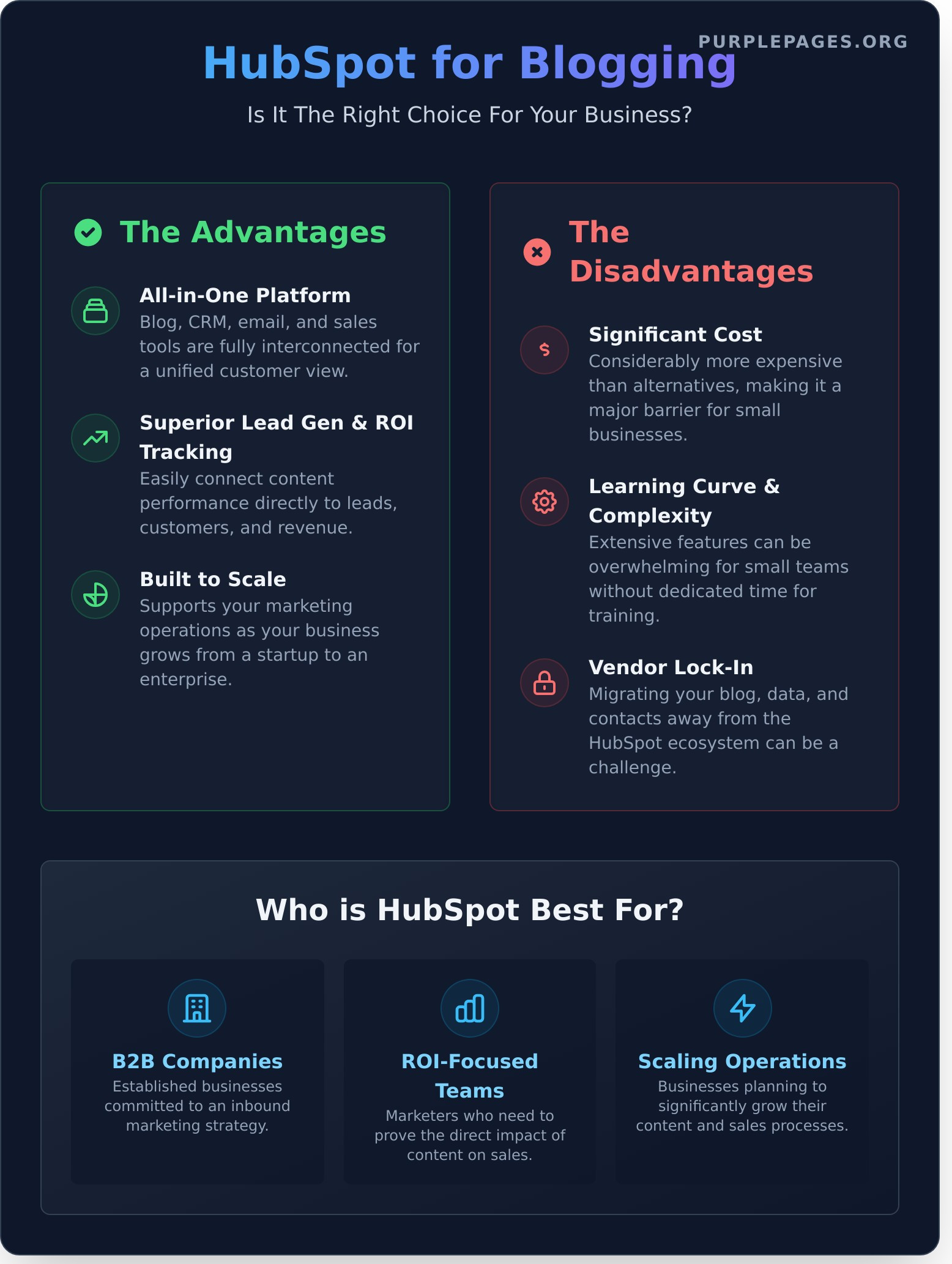
Many businesses choose HubSpot because it is a true all-in-one platform. Your blog, CRM, email marketing, and sales tools are all interconnected, providing a unified view of your customer’s journey. This makes it excellent for lead generation and tracking the return on investment (ROI) of your content marketing efforts. The platform is also built to scale, meaning it can support your business as it grows from a small startup to a large enterprise. Finally, HubSpot offers strong customer support and has a large, active community, so help is always available when you need it.
The Disadvantages: Potential Deal-Breakers
The most significant barrier for many businesses is the cost. HubSpot can be considerably more expensive than alternatives, especially for small businesses or those just starting. The platform’s extensive features can also lead to complexity; it may be overwhelming for solo bloggers or small teams who don’t have the time to learn and utilize all its capabilities. Another point to consider is vendor lock-in. Because all your tools and data are within one ecosystem, migrating your content and contacts away from HubSpot to another platform in the future can be a challenging and time-consuming process.
Who Should Use the HubSpot Blog Platform?
So, is HubSpot the right choice for you? Let’s identify the ideal user for HubSpot’s blogging tools and also cover who might be better served by a different solution. This will help you align your needs with what the platform delivers best.
It’s a Great Fit For:
HubSpot is an excellent choice for established B2B companies that are deeply committed to an inbound marketing strategy. It is also ideal for marketing teams that are under pressure to prove the ROI of their content, as the platform’s analytics make it easy to connect blog posts to leads and sales. Finally, businesses that are planning to scale their content operations significantly will find that HubSpot’s integrated tools can grow with them and support a more complex marketing and sales process.
Consider Alternatives If You Are:
On the other hand, HubSpot may not be the best fit if you are a hobby blogger or a solopreneur on a tight budget. If your business just needs a simple, standalone blog without the complexity of a full CRM, there are more straightforward options available. Additionally, users who prefer the flexibility and extensive customization options of open-source platforms like WordPress might find HubSpot too restrictive. If you want to share your expertise without the cost and complexity of managing a platform, you can always contribute to established publications. For example, you can Write for our business blog.
Frequently Asked Questions About the HubSpot Blog
Is the HubSpot blog free to use?
HubSpot offers a free CRM with some basic blogging tools, but most of the advanced features discussed here, such as SEO suggestions and detailed analytics, are part of their paid Marketing Hub plans.
How much does the HubSpot blogging platform cost?
The cost varies widely depending on the plan you choose. The Marketing Hub plans that include the blogging software can range from around fifty dollars a month for the Starter plan to several thousand dollars per month for the Enterprise plan.
Can you use HubSpot for blogging without the full CRM?
No, the blogging software is an integrated part of the HubSpot CRM platform. While you can use it primarily for blogging, it is inherently connected to the CRM for contact management and lead tracking.
What are the best alternatives to the HubSpot blog?
The most popular alternative is WordPress, which is highly flexible and can be more cost-effective. Other alternatives include Ghost for a simpler, publication-focused experience, and Squarespace or Wix for all-in-one website builders with blogging capabilities.
Is HubSpot better than WordPress for blogging?
It depends on your needs. HubSpot is better for businesses that want an all-in-one marketing and sales platform and need to track ROI closely. WordPress is better for those who want more design flexibility, a lower cost, and control over their hosting and plugins.
Ultimately, choosing the right blogging platform depends on your budget, business goals, and technical resources. HubSpot offers a powerful, integrated solution that can deliver incredible results for the right company, but it’s not the only path to content marketing success. If you’re passionate about sharing your knowledge and want to reach a wide audience without managing the backend of a complex system, contributing to a broader platform is an excellent option. Join a community of proficient writers and Share your business insights with our audience. Write for us!